
For commercial kitchens
Grease trap pumping in Pocatello
A grease trap is a compliance item with a bad temper: ignore it and it escalates from smell, to slow floor drains, to a line blockage with your name on it. The fix is boring - a schedule that matches how fast your kitchen actually fills the trap.
The schedule is the service
Sized to the kitchen, not the calendar
Two kitchens on the same block fill traps at wildly different rates - a fry-heavy lunch counter on Yellowstone can load an indoor trap in three weeks while a coffee shop's interceptor coasts a quarter. So we do not sell everyone "quarterly." The first service establishes a baseline, the second shows the fill rate, and the interval gets set from measurement. After that it runs itself: we arrive on schedule, before the trap is a problem.
Every service, documented
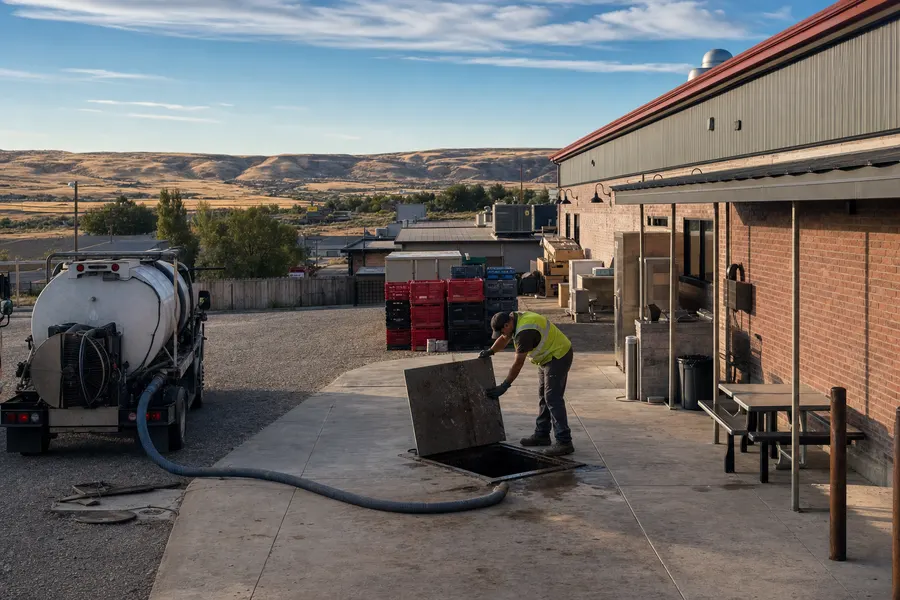
- Full pump-down of the trap or interceptor - grease cap, liquids, and settled solids, not a skim
- Condition noted: baffles, inlet/outlet tees, lid seal
- Date and volume logged to your service history - the record the health district conversation wants
- Off-hours service available so the truck is gone before the lunch rush
We service outdoor in-ground interceptors and indoor under-sink traps across Pocatello and Chubbuck's commercial corridors, plus the kitchens down-valley in Inkom, McCammon, and Lava Hot Springs that otherwise wait on a truck from up north. Pricing runs by interceptor size - typical ranges are on the pricing page, and a standing schedule earns the low end of them.
Questions we get on the phone
Grease trap questions, answered straight
How often does a grease trap need to be pumped?
The working rule is the 25% rule: when grease and solids reach a quarter of the trap’s depth, it stops trapping and starts passing. For most Pocatello kitchens that lands between monthly and quarterly - a busy fryer line fills an undersized indoor trap far faster than a big outdoor interceptor.
What happens if a trap goes too long?
Grease passes downstream and hardens in your lateral or the city main. Best case is your own emergency line-jetting bill; worst case the city traces a main blockage back to your interceptor. The pumping schedule is cheap against either invoice.
Do you provide service records for inspections?
Yes - every service is documented with date, volume, and trap condition, and we keep the history. When the health district or the city asks how often the trap is pumped, the answer is a folder, not a shrug.
Can you put my kitchen on a standing schedule?
That is the normal arrangement: we size the interval to how fast your trap actually fills - measured over the first couple of services, not guessed - then show up on schedule without a call needed. Busy season adjustments are a phone call.
Free straight quote
Tell us about the kitchen. We'll size the schedule.
Trap location (indoor or in-ground), roughly how busy the line runs, and when it was last pumped. We come back with an interval and a number. Or talk it through at (208) 427-2504.
- The price you hear on the phone is the price on the invoice - gallons and travel included, no fuel-surcharge surprise
- If the honest answer is "your tank can wait two more years," that's what we say, and you keep your money
- Every crew sent to your place holds the Idaho DEQ pumper permit - ask and they'll show it